

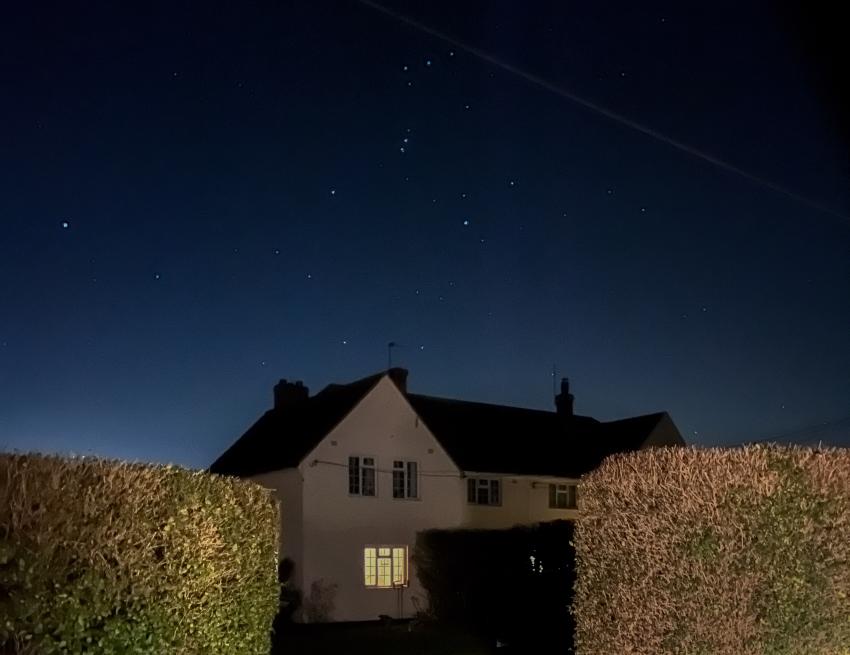

A small hamlet in Suffolk has become the first community in England to receive international dark sky status.
Thorington Street, which has about 40 houses, was officially designated an International Dark Sky Community by DarkSky International following a "tireless" campaign by nine residents.
It joins six other such communities in the UK: three in Scotland (Orkney, Coll, and Moffatt), two in Wales (Presteigne and Gower) and one in the Channel Islands (Sark).
Dan Oakley, Policy and Destination Manager of DarkSky, said: "The level of commitment to achieve dark sky status from such a small community was amazing.
"Their influence on the wider national landscape in adopting a lighting management plan was a key component of their success and will undoubtedly inspire other places to follow their example."
DarkSky International defines a Dark Sky Community as a town, city, municipality, or other legally organised community that has shown exceptional dedication to the preservation of the night sky through the implementation and enforcement of a quality outdoor lighting ordinance, dark sky education, and citizen support of dark skies.

Thorington Street's grassroots campaign group spent nine years garnering support for DarkSky accreditation by explaining their goal to parish councillors and local MPs, as well as distributing leaflets to businesses, schools, churches, restaurants, pubs, hotels and community organisations.
"I feel really lucky to live in an area where the dark sky means I can look up and see the stars and Moon," said one resident Jayne Liu. "Preserving this precious gift is something we should all aim to do."
Dan Marcal, who also lives in hamlet, added: "The darkness in Thorington Street is our friend, it allows for wonderful views of the silky night sky. More practically one can see if someone is poking about the area with a torch!"
Thorington Street is located in southeast Suffolk in the geographical centre of the Dedham Vale, an historically important and statutory protected area of 35 square miles in the middle of the Dedham Vale and Stour Valley National Landscape on the Essex/Suffolk border in the East of England.
The Vale has been immortalised in paintings from John Constable and Thomas Gainsborough to Alfred Munnings and Maggi Hambling.
Charles Clover, chairman of the Dedham Vale Society, which initiated the Dark Sky campaign, said: "Without Marcia Brocklebank and the Dark Sky Campaign team working tirelessly for so many years to provide evidence and support for this designation, the Dedham Vale Society could not have achieved this important win for the Vale – continuing the work so many people have put in over 80 years to protect its special character.
"We are incredibly grateful to them and we hope the boundaries of the Dark Sky Community continue to expand to include most if not all of the Vale."
The Dedham Vale Dark Skies campaign's contribution to the battle against light pollution was also recognised by the National Trust when the group was offered the use of a large Tudor barn, garden and adjacent field as a Dark Sky Discovery Centre. It has opened up the possibility of stargazing, astronomy and educational events for schoolchildren and the wider community.
The campaign group's future plans include developing an astrotourism model for dark sky viewing in connection with local pubs and hotels, where guests have dinner followed by a tutored evening of stargazing with the help of a sky map, binoculars and telescopes.
Founded in 2001, the International Dark Sky Places Program encourages communities, parks, and protected areas worldwide to preserve and protect dark sites through effective lighting policies, environmentally responsible outdoor lighting, and public education.
Thorington Street now joins more than 250 places across the globe in striving to protect the night sky from light pollution.
Find out more at: https://darksky.org/what-we-d-/international-dark-sky-places/
ENDS
Media contacts
Sam Tonkin
Royal Astronomical Society
Mob: +44 (0)7802 877 700
Mike Barrett
Dedham Vale National Landscape Dark Skies campaign
Mob: +44 (0)7710 197 202
Images & captions
Thorington Street at night
Caption: Thorington Street in Suffolk has become the first community in England to receive international dark sky status.
Credit: Dedham Vale Dark Skies
Thorington Street Dark Sky Discovery Centre
Caption: The Thorington Street Dark Sky Discovery Centre with Aurora Borealis behind.
Credit: Dedham Vale Dark Skies
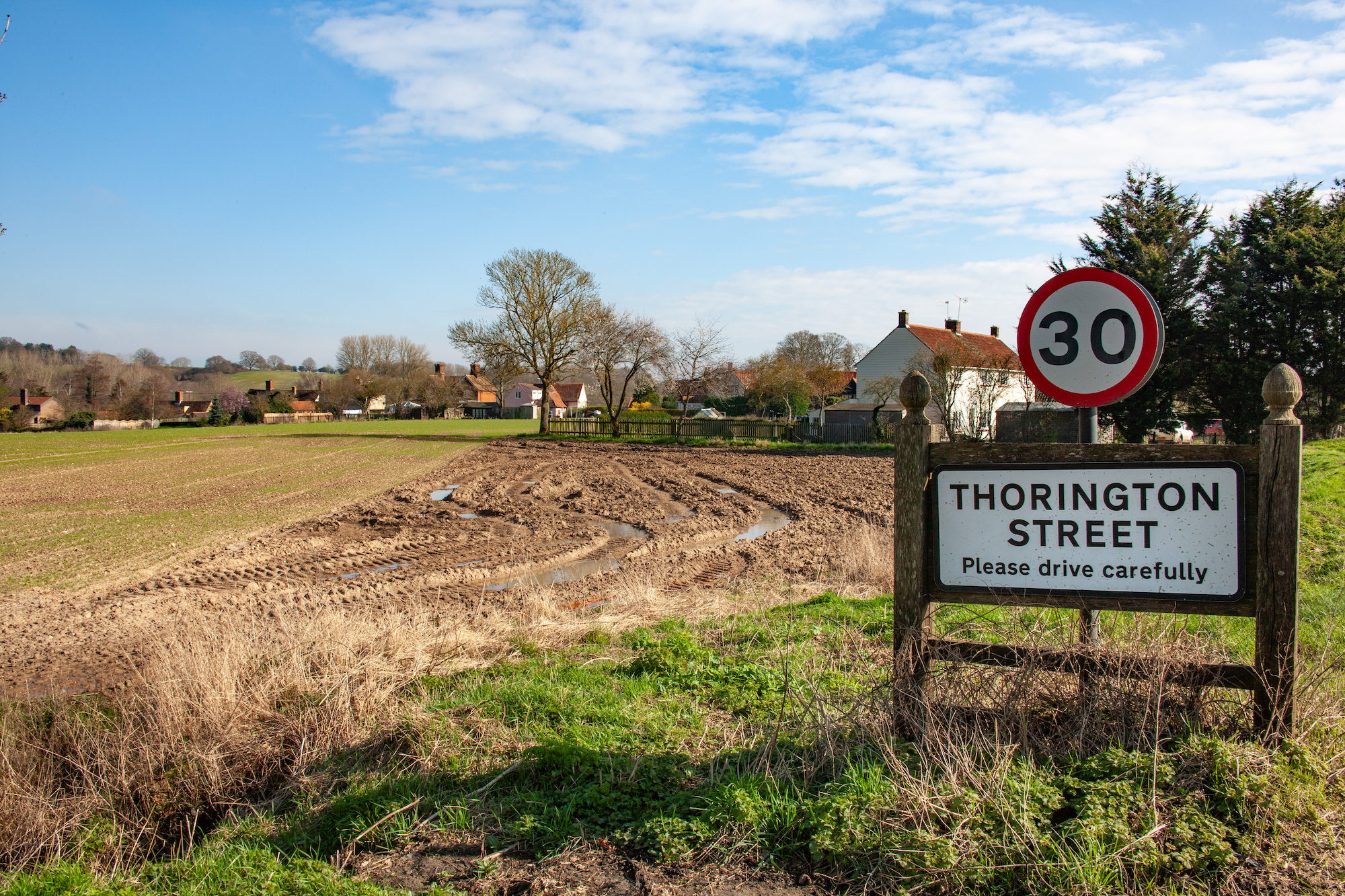
Thorington Street
Caption: The small hamlet is home to about 40 houses.
Credit: Dedham Vale Dark Skies
Notes for editors
About the Royal Astronomical Society
The Royal Astronomical Society (RAS), founded in 1820, encourages and promotes the study of astronomy, solar-system science, geophysics and closely related branches of science.
The RAS organises scientific meetings, publishes international research and review journals, recognises outstanding achievements by the award of medals and prizes, maintains an extensive library, supports education through grants and outreach activities and represents UK astronomy nationally and internationally. Its more than 4,000 members (Fellows), a third based overseas, include scientific researchers in universities, observatories and laboratories as well as historians of astronomy and others.
The RAS accepts papers for its journals based on the principle of peer review, in which fellow experts on the editorial boards accept the paper as worth considering. The Society issues press releases based on a similar principle, but the organisations and scientists concerned have overall responsibility for their content.
Keep up with the RAS on Instagram, Bluesky, LinkedIn, Facebook and YouTube.
Download the RAS Supermassive podcast